Rehearse scripts.
Memorize lines.
Arrive ready.
Bring in your sides, choose your role, and run the scene with a partner who never misses a cue, until the lines live in you.
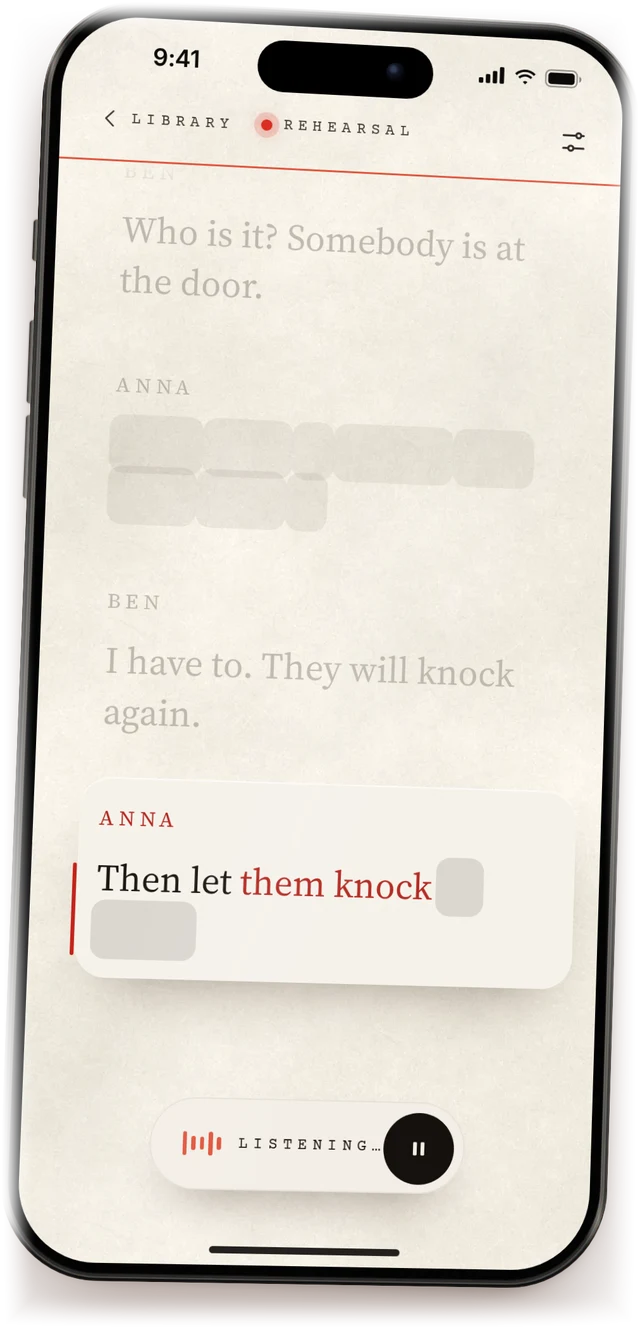
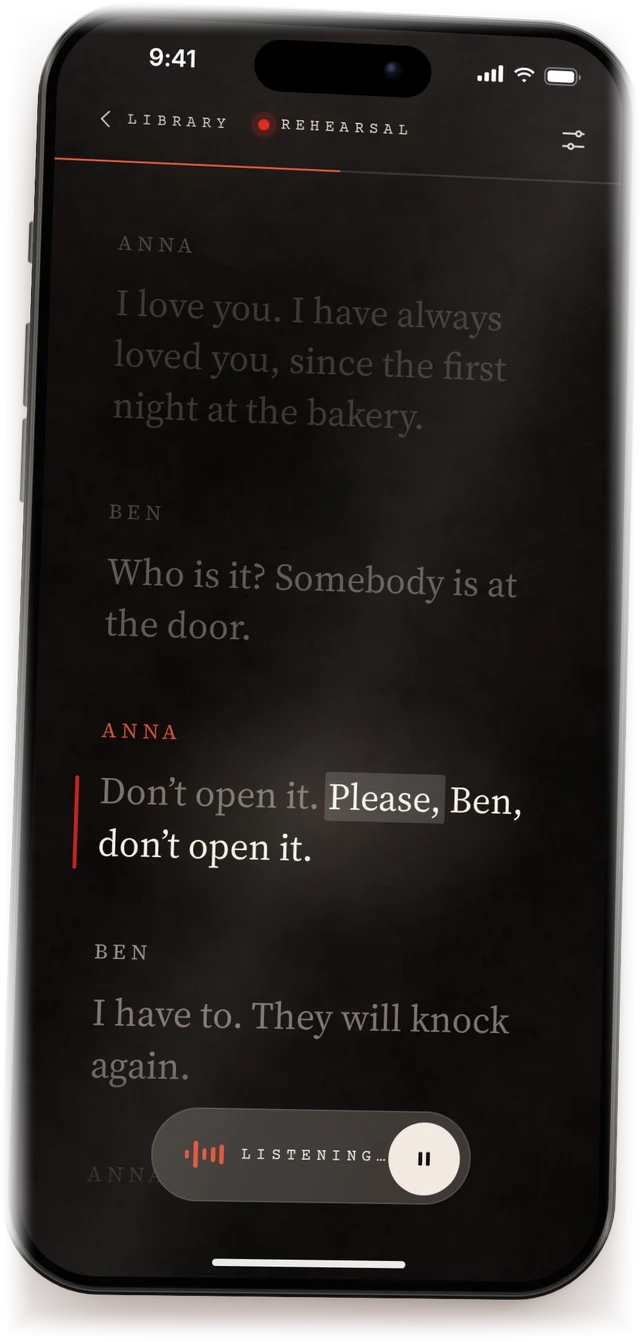

A rehearsal room in your pocket, built around the actor’s work.
Acting is not the script on the page. It is the risk of stepping into another life while other people are watching. For thousands of years, from the amphitheatres of Athens to a rehearsal room in Brooklyn, actors have carried that responsibility.
The script is not the art. The actor is. Klieg simply gives you a place to do the private work before the room sees it.
…to land a single role. Each one asks for fresh work: new sides, a new character, cold material delivered warm. Alone, at midnight, without waiting for anyone.
From sides to stage-ready.
Three movements, the way a rehearsal actually goes.
Bring in your sides.
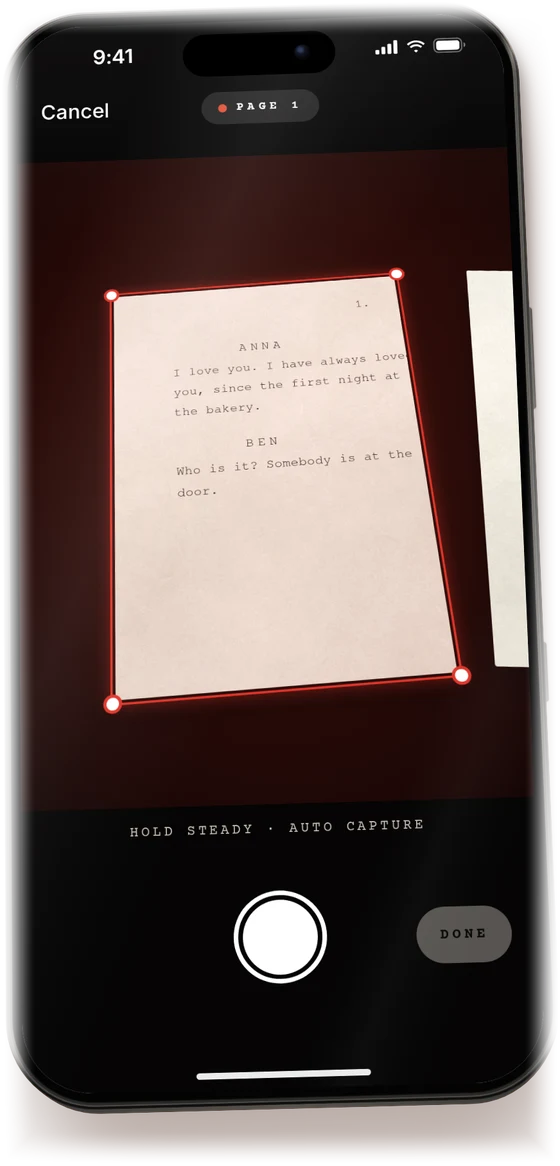
Paste the text, photograph the pages, or upload the PDF. Klieg finds every character, line and cue.
Run the scene, alone or together.
Practice by yourself while Klieg reads every other part, work with scene partners, or listen to the whole piece first.
Get off book without being rushed.
Hide your lines and say them from memory. Ask for a line when you need it. Take the pause the scene needs.
One place for the work you already do.
Keep scripts organized, rehearse alone or with partners, listen to the text aloud, and build the analysis that brings the character to life.
Rehearse your lines
Choose your role and let Klieg read the other characters aloud. It listens for your line, waits through real acting pauses, and prompts when you say “line”.
Hear the whole script
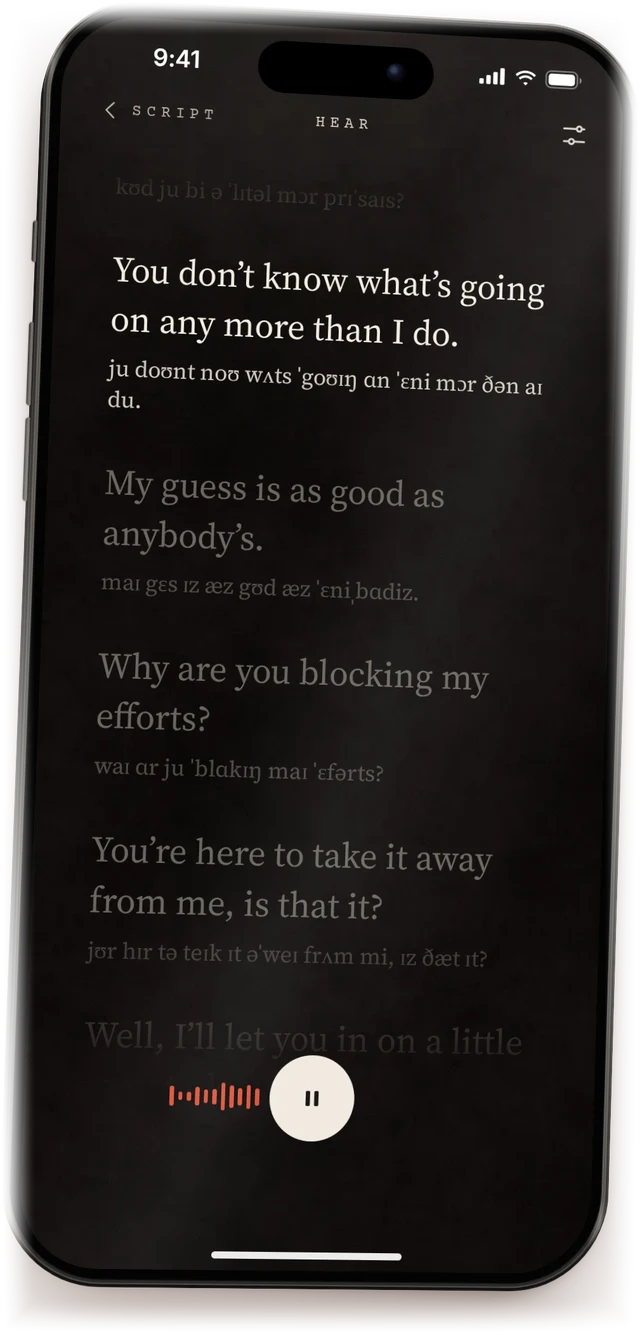
Listen through every part, stage direction and cue, with phonetics under each line. A first pass for new sides, scenes, monologues and plays.
Analyze the script
Pasted text, photographed pages and PDFs become structured scripts, with characters, dialogue, scene headers and stage directions.
Build your notebooks
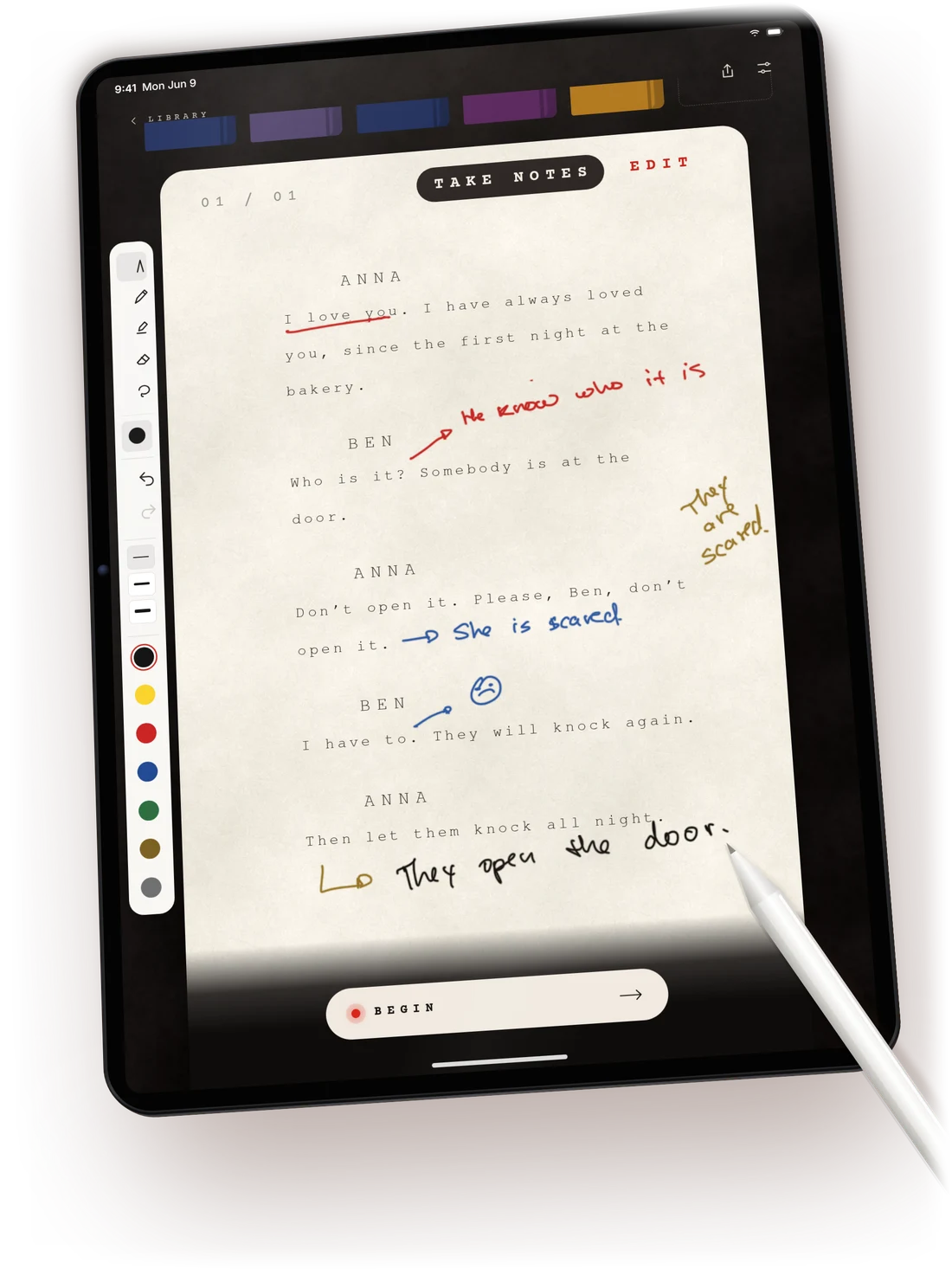
Prep notebooks from templates: character and scene analysis, beat breakdowns, superobjectives, IPA and actor notes. On iPad, write on the page with Apple Pencil.
Record your self tape
Your lines float by the lens and Klieg reads your partner. The teleprompter never ends up in the video.
Practical notes for the private work.
 Auditions
How to Cold Read for an Audition: A Practical Guide for Actors
A practical actor-centered guide to cold reading for auditions: how to read sides quickly, find the scene, hold the page, make choices, and stay alive under pressure.
Read the note Monologues
How to Rehearse a Monologue Alone Without Going Flat
A practical guide for actors rehearsing a monologue alone: imaginary partner, objectives, cue logic, memorization, timing, tactics, and keeping the piece alive.
Read the note Memorization
How to Memorize Lines: A Complete Guide for Actors
A complete actor-centered guide to memorizing lines as thoughts, cues, rhythm, body, and freedom, without locking yourself into dead choices.
Read the noteThe stage awaits.
Free on the App Store, for iPhone and iPad. One place to arrive prepared.